


Escondido Homeowners: Expert Tips for Your Next Furnace Installation


Why Your Furnace Decision Matters for Year-Round Comfort
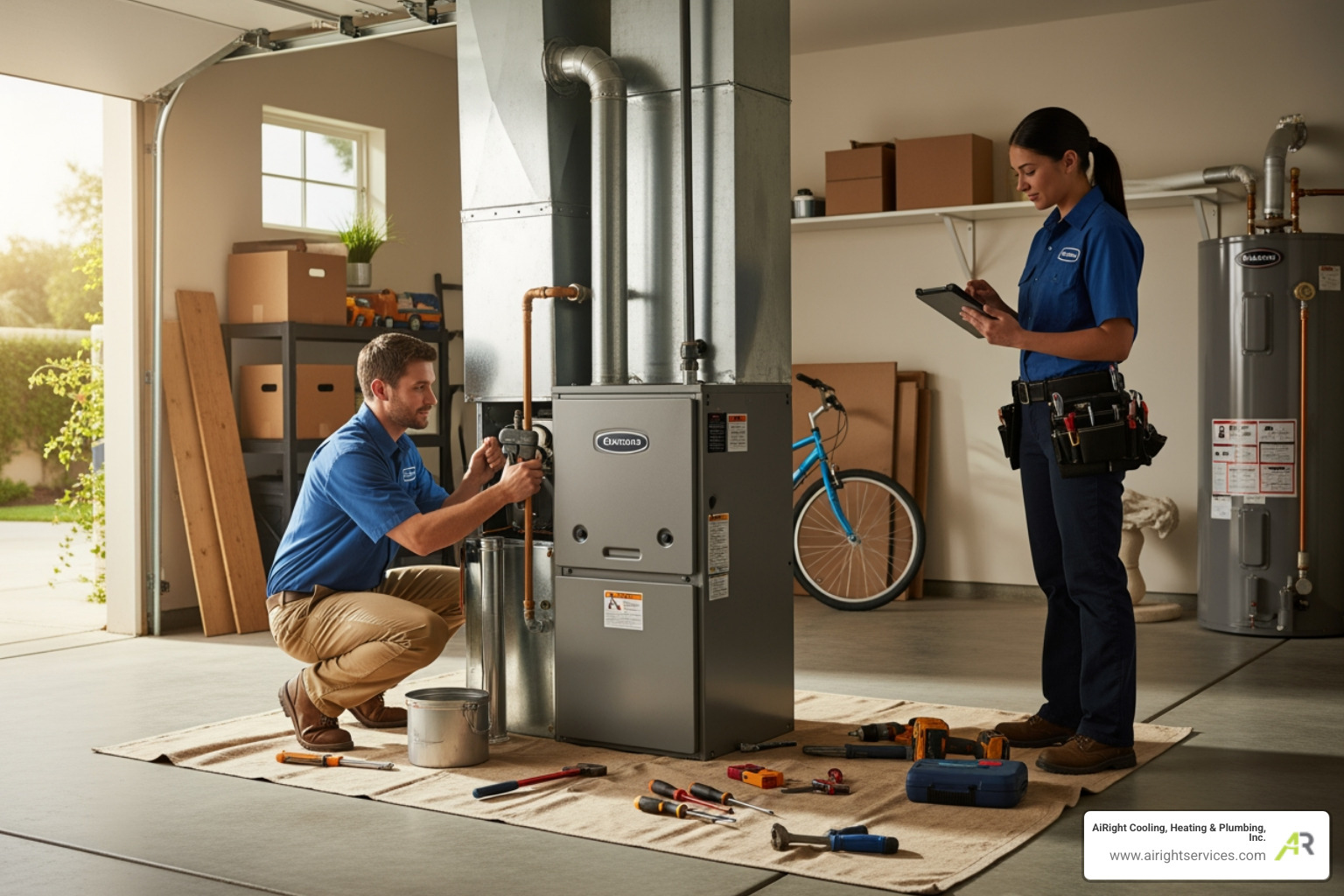
Residential furnace installation in escondido, ca is more than just swapping out an old heating unit—it's a long-term investment in your family's comfort, safety, and financial well-being. This single decision will impact your home's environment and your energy bills for the next 15 to 20 years. Whether your current system is showing its age with frequent breakdowns, driving up utility costs, or leaving certain rooms uncomfortably cold, choosing the right furnace and ensuring it's installed by a qualified professional makes all the difference. While Escondido's winters are milder than in other regions, those chilly nights demand a heating system that works reliably and efficiently. A poorly chosen or installed furnace won't just fail to keep you warm; it will waste energy and money every time it runs.
Quick guide for homeowners planning a furnace installation:
- Recognize warning signs: Be aware of frequent repairs, uneven heating, strange noises, or any system older than 15 years.
- Choose the right type: Gas furnaces offer powerful, cost-effective heating, while electric furnaces provide simpler, safer installation.
- Size it correctly: A professional load calculation is key. A system that's too big or too small will be inefficient and prone to breakdowns. Common estimates include: 40,000-60,000 BTU for homes up to 1,200 sq. ft.; 60,000-90,000 BTU for 1,200-2,000 sq. ft.; 90,000-120,000 BTU for 2,000-3,000 sq. ft.; and 120,000+ BTU for homes over 3,000 sq. ft.
- Hire local professionals: Ensure your installation includes proper permits, a thorough ductwork inspection, and full compliance with Escondido's building codes.
- Plan for maintenance: Protect your investment with annual tune-ups to extend the furnace's lifespan and prevent costly emergency repairs.
If your furnace is failing and you need immediate help, our 24-hour heating guide covers emergency solutions, and you can schedule a furnace installation consultation to get started on a permanent fix.
The professional installation process is comprehensive. It begins with a careful evaluation of your home's unique heating needs, followed by selecting high-efficiency equipment that matches Escondido's climate. The process also includes inspecting and sealing ductwork, obtaining all necessary permits, and performing thorough system testing to ensure optimal performance. Common mistakes like choosing the wrong size based on square footage alone, skipping permits, or ignoring ventilation can lead to major inefficiency, serious safety hazards, and premature system failure. A professional installation ensures your investment pays off through consistent comfort, lower energy bills, and lasting peace of mind.
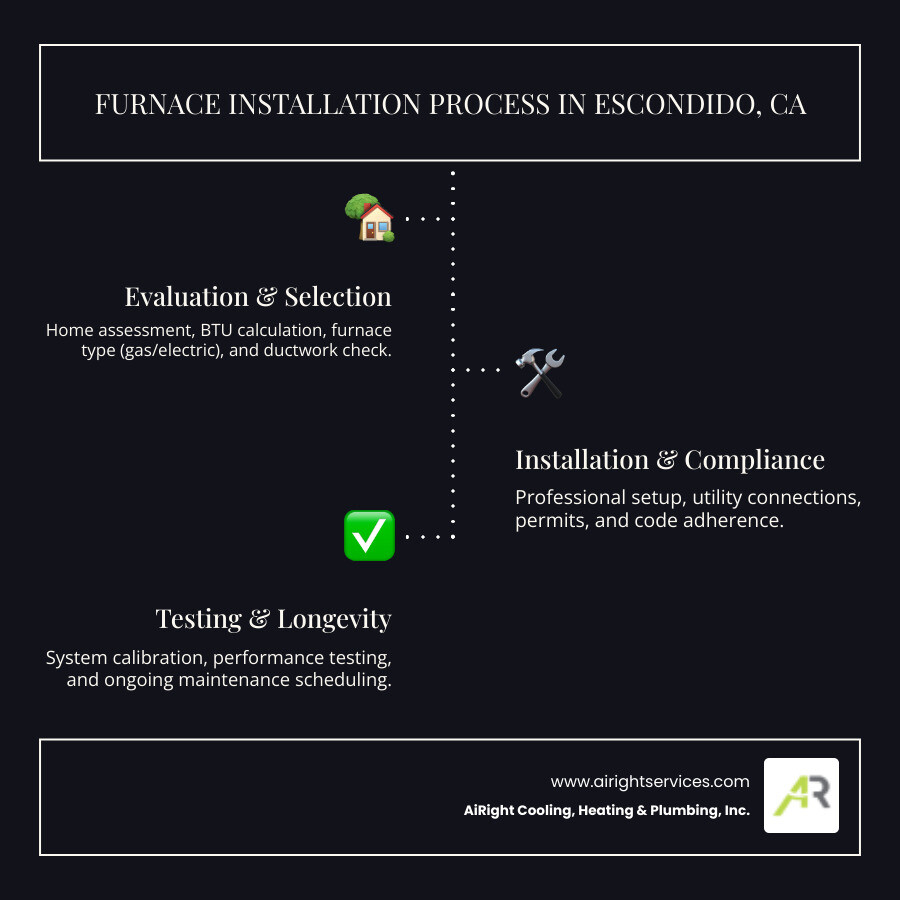
Key residential furnace installation in escondido, ca vocabulary:
Is It Time for a New Furnace? Key Warning Signs
Even in Escondido, where the sun shines bright for much of the year, a reliable furnace is essential for those cooler evenings and winter days. But how do you know when your old furnace is waving a white flag, signaling it's time for a replacement rather than another repair? The average lifespan of a furnace is between 15 to 20 years, so if yours is approaching or past that mark, it's wise to start paying close attention to its performance. Ignoring these signs can lead to escalating energy bills, uncomfortable living spaces, poor indoor air quality, and even serious safety hazards.
Here are the key indicators that your furnace might be ready for retirement:
- Furnace lifespan: If your furnace is older than 15-20 years, it's operating on borrowed time. It is likely far less efficient than modern units and more susceptible to sudden failure.
- Increased energy bills: A sudden or gradual spike in your heating costs, without a corresponding change in usage or utility rates, often points to an inefficient furnace. As components wear out, the system must work harder and burn more fuel to produce the same amount of heat.
- Uneven heating: Do some rooms feel like a sauna while others are perpetually chilly? This inconsistency is a classic sign of a failing furnace that can no longer distribute heat evenly throughout your home, often due to a weakened blower motor or ductwork issues.
- Strange noises: Banging, rattling, squealing, or grinding sounds are your furnace's cry for help. Banging can indicate dirty burners or ductwork problems, while squealing often points to a failing belt or motor bearings. These noises signal mechanical problems that should be addressed immediately.
- Frequent cycling: If your furnace is constantly turning on and off in short bursts (a behavior known as short-cycling), it's a clear sign of a problem. This could be due to an improperly sized unit, a faulty thermostat, or a clogged filter causing overheating. This constant starting and stopping puts immense strain on the system's components.
- Poor air quality: An aging furnace can negatively impact your home's air. It may struggle to filter contaminants, leading to an increase in dust, allergens, and dry air. Musty smells can also indicate mold or mildew growth within the furnace or ductwork.
Here's an illustration of the top 5 signs a furnace needs replacement:
For immediate heating concerns, especially during unexpected breakdowns, remember our 24-hour heating guide can provide valuable assistance.
Recognizing an Aging System
As furnaces age, they naturally become less reliable and efficient. Beyond the typical 15-20 year lifespan, an older system often requires more frequent and costly repairs. If you find yourself calling for service every heating season, the cumulative cost of these repairs can quickly approach the price of a new, more reliable unit. A replacement becomes a more financially sound decision in the long run. Look for physical signs of aging, such as visible rust or corrosion on the furnace's exterior or internal components. These can indicate water leaks or metal fatigue, signaling a system in serious decline. Furthermore, outdated technology simply can't compete with the energy efficiency and advanced comfort features of newer models, meaning you're paying more for less comfort and performance.
Performance and Comfort Issues
Your home should be a sanctuary of comfort, and your furnace plays a crucial role in maintaining that. When a system starts to fail, you'll notice it in the form of inconsistent temperatures throughout your home. Cold spots become common, and your furnace may struggle to keep up with your thermostat's settings, running almost constantly without ever reaching the desired warmth. Another symptom is reduced airflow from your vents. This can indicate issues with a failing blower motor or clogged ductwork, both of which put additional stress on the entire heating system and can lead to a complete breakdown.
Safety Concerns and Strange Odors
Safety should always be your top priority when it comes to fuel-burning appliances. For a gas furnace, a yellow or flickering pilot light, instead of a strong and steady blue flame, is a critical warning sign that the furnace is not burning fuel completely. This incomplete combustion can lead to the production of dangerous, odorless carbon monoxide gas. If you ever detect a gas or rotten egg smell near your furnace, you may have a gas leak, which is extremely hazardous. Evacuate your home immediately, do not use any electronics or light switches, and contact your gas provider and emergency services from a safe distance. Other smells, such as persistent burning or dusty odors, can also point to electrical problems or overheating components. For any concerns about unusual smells or performance, it is always best to consult with a certified heating professional who can safely diagnose the issue and ensure your system operates correctly.
Choosing the Right Furnace for Your Escondido Home
Selecting a new furnace for your Escondido home involves more than just picking the first model you see. It's about finding the perfect balance of energy efficiency, appropriate size, and the right fuel type to suit your specific needs and our local climate. A thoughtful choice, guided by professional expertise, will ensure your home remains a comfortable sanctuary for years to come. Our goal is to help you make an informed decision that ensures lasting comfort and optimal performance.
When we help you choose a new furnace, we consider several key factors:
- Energy efficiency: Newer models are significantly more energy-efficient, translating into tangible savings on your utility bills.
- Furnace size (BTU): This is crucial for effective heating without wasting energy. We determine the right size through a detailed load calculation.
- Fuel type: Gas and electric are the most common options in our area, each with its own set of benefits.
- Escondido climate: While our winters are mild, a reliable and efficient heating system is still a necessity for cool nights and mornings.
- Indoor air quality features: Many modern furnaces can integrate with whole-home air purifiers and humidifiers for improved health and comfort.
For all your heating needs, from selection to installation, we're dedicated to providing comprehensive heating services in Escondido, CA.
Gas vs. Electric Furnaces: A Comparison for Escondido
The choice between a gas and electric furnace is one of the most significant decisions homeowners face during a residential furnace installation in escondido, ca. Both have distinct advantages and disadvantages, especially considering Escondido's climate and local utility costs.
| Feature | Gas Furnaces | Electric Furnaces |
|---|---|---|
| Operating Cost | Generally lower due to the historically lower cost of natural gas. | Typically higher as electricity rates are often more expensive per unit of heat. |
| Heating Power | Produces very hot air quickly, providing powerful and rapid heating. | Heats more gradually and the air from the vents may not feel as hot. |
| Installation | More complex and costly; requires a natural gas line and proper venting (a flue) for exhaust fumes. | Simpler and often less expensive to install; no gas line or flue needed. |
| Safety | Modern units are extremely safe, but require annual maintenance to prevent any risk of carbon monoxide leaks. | Considered exceptionally safe with no combustion process and no risk of gas leaks. |
| Lifespan | Typically 15-20 years with proper maintenance. | Can last longer, often 20-30 years, due to fewer complex mechanical parts. |
| Environmental Impact | Burns a fossil fuel, but high-efficiency models minimize emissions. | Produces no direct emissions, but its environmental impact depends on how the electricity is generated. |
Sizing Your Furnace Correctly with a Load Calculation
One of the most critical steps in a furnace installation is ensuring the unit is sized correctly for your home. This is not something that can be accurately guessed based on square footage alone. A professional technician performs a detailed load calculation (often called a Manual J calculation) that considers numerous factors:
- Your home's total square footage
- Ceiling height and layout
- The quality and amount of insulation in walls and the attic
- The number, size, and type of windows and doors
- The home's orientation to the sun
- Local climate data for Escondido
A furnace that is too large (oversized) will heat the space too quickly and shut off, a process called short-cycling. This leads to temperature swings, increased energy waste, and excessive wear and tear on components. A furnace that is too small (undersized) will run constantly on the coldest days, struggling to reach the thermostat setting and leading to high energy bills and a chilly home. Proper sizing ensures steady, efficient heating and long-term reliability.
Understanding Energy Efficiency (AFUE Ratings)
When comparing furnaces, you will see an AFUE rating. AFUE stands for Annual Fuel Utilization Efficiency, and it measures how efficiently a furnace converts fuel into usable heat over the course of a year. For example, a furnace with an 80% AFUE rating converts 80 cents of every dollar you spend on fuel into heat, while the other 20 cents is lost through the chimney or exhaust. A high-efficiency furnace with a 95% AFUE rating wastes only 5 cents per dollar.
- Standard-Efficiency (80% AFUE): These are the most common and affordable models. For Escondido's mild climate, an 80% AFUE furnace is often a practical and cost-effective choice.
- High-Efficiency (90-98% AFUE): These units cost more upfront but provide significant long-term savings on utility bills. They use a secondary heat exchanger to capture more heat from the exhaust gases. This makes them a great investment for homeowners focused on lowering their carbon footprint and monthly energy costs.

Customer Reviews


Contact Us Today For Acquiring Or For Any Information About additional services for your home.

